How Festi Built a Harvesting Data Platform
Managing data pipelines and labeling tasks manually slows every project down. Festi built a centralized data platform that replaced scattered, ad-hoc processes with a structured marketplace, automated pipelines, and human-in-the-loop workflows, cutting hypothesis validation costs by over 40% and improving dataset task efficiency by more than 60%.
Project Highlights
- Task marketplace for labeling, scraping, and data gathering with built-in budget tracking and transparency
- Pipeline builder for training and evaluating neural network models, with full execution logging
- Human-in-the-loop reinforcement learning layer for edge case review and model quality control
- Internal crowdsourcing system for distributing annotation tasks across a managed contributor pool
- Admin dashboards giving team leads and clients real-time visibility into task status and spend
- API-ready architecture connecting the platform to external client environments without custom integrations
The Challenge
The Festi team kept running into the same bottleneck: image labeling requests, custom data pipeline builds, and hypothesis validation cycles with no formal process behind them. Each request came in differently, got handled differently, and left no clear record of time spent or budget used.
As client requests scaled alongside internal needs, the gap between demand and capacity became a real operational problem. Validating a single hypothesis could stretch across multiple tools and team members, with no shared visibility into progress or cost.
What the Research Showed
After mapping the problem, the team identified two core issues. Dataset preparation tasks like labeling, scraping, and gathering had no dedicated home. Pipeline execution for training and evaluating neural network models was manual, inconsistent, and difficult to track.
The opportunity was bigger than fixing internal friction. A scalable, well-structured data platform could serve clients across industries as a standalone offering, with built-in transparency and budget controls from day one.
The Solution: What Festi Built
Festi built a modular data platform that handles the full lifecycle of dataset preparation and model training, from task intake to pipeline execution and human review.
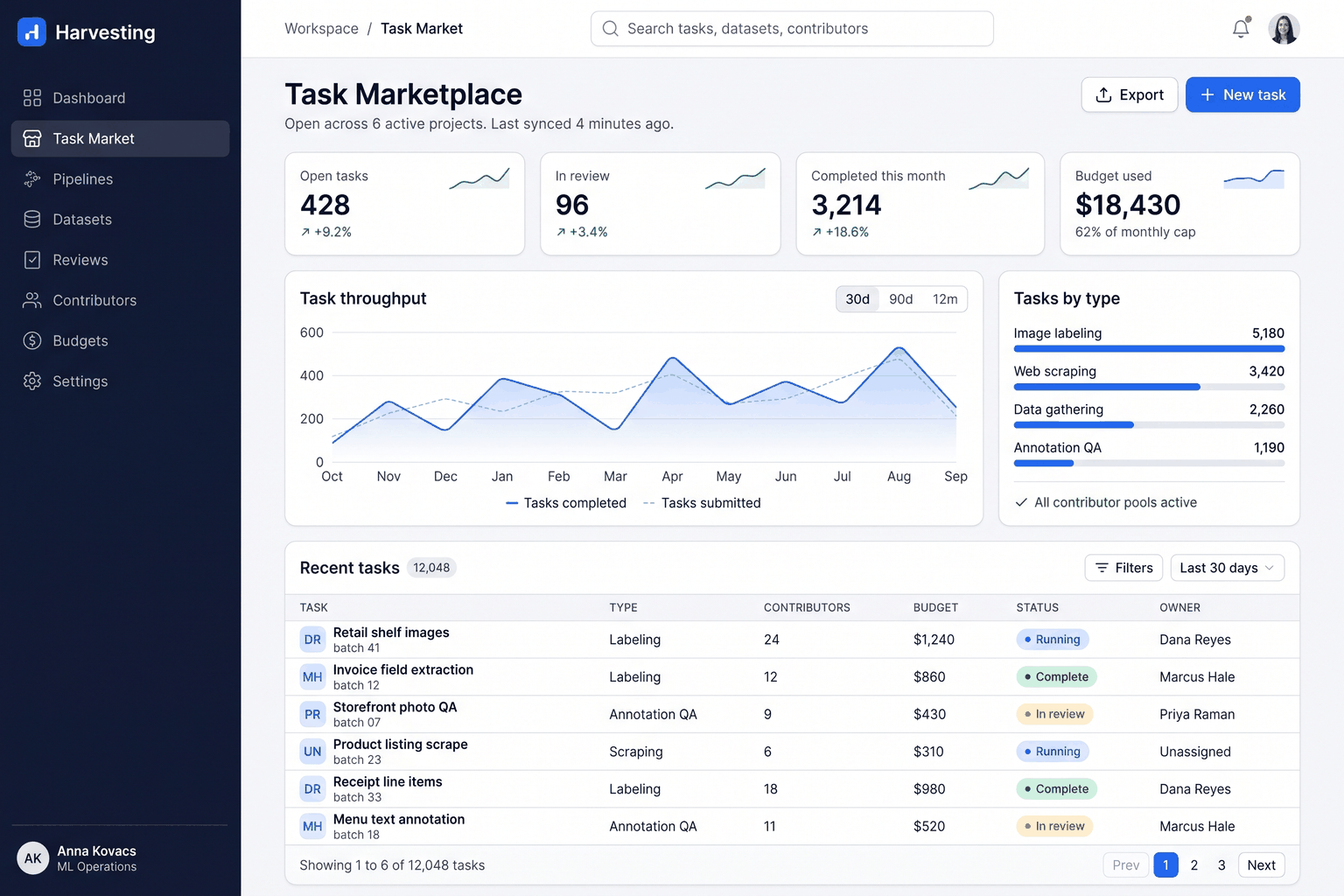
Task Marketplace
The platform functions as an internal marketplace for dataset-related work. Teams and clients submit labeling, scraping, and data-gathering tasks through a structured interface, replacing ad-hoc requests with a trackable, budgeted workflow. Festi's Scraping Toolkit powers the data collection layer, giving the platform pre-configured workers and multi-source extraction across web and structured data environments.
Training and Evaluation Pipelines
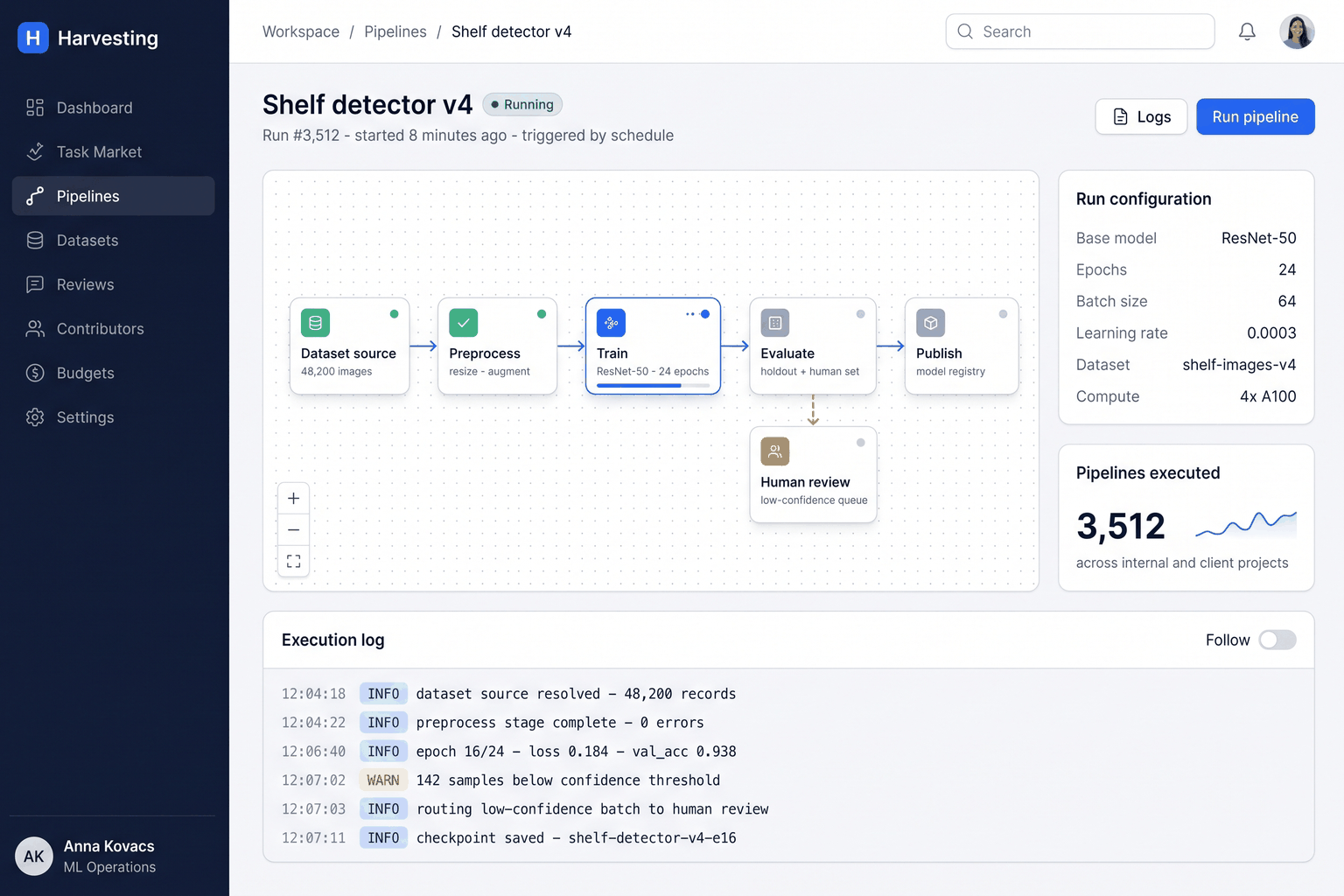
Users build and run pipelines for neural network model training and evaluation directly inside the platform. The pipeline builder connects to existing data sources, applies defined configurations, and executes jobs with full logging. The Workflow Automation Toolkit underpins pipeline orchestration, handling triggers, conditions, and execution logic without custom code for each job. Over 3,500 pipelines have run through the system.
Human-in-the-Loop Reinforcement Learning
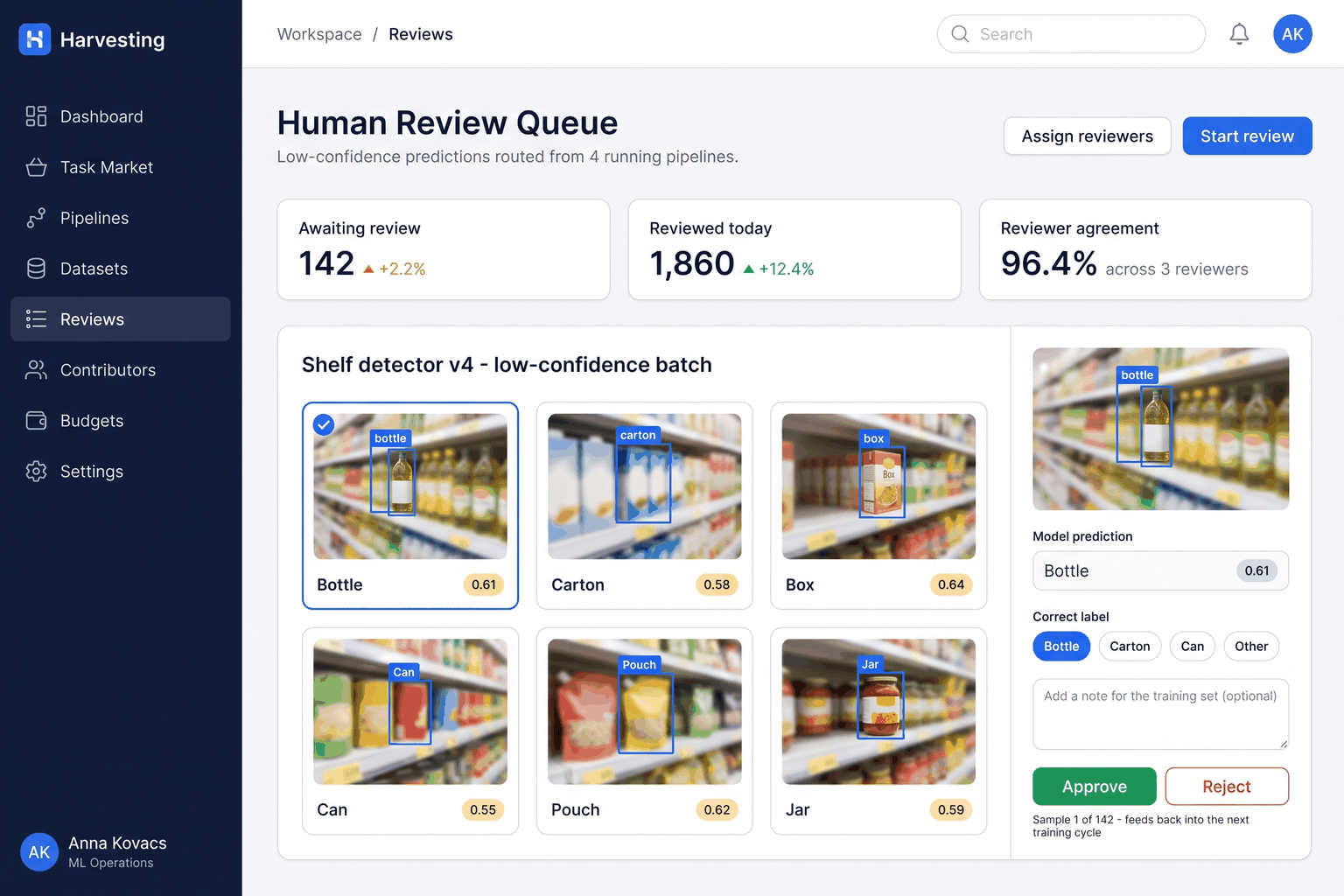
Not every decision can be automated. The platform routes edge cases and low-confidence outputs to human reviewers before results feed back into model training cycles. This keeps model quality high without removing human judgment from the process.
Crowdsourcing Layer
An internal crowdsourcing system, modeled after Amazon Mechanical Turk, distributes labeling and annotation tasks across a broader pool of contributors. Task assignment, quality control, and payment tracking all run inside the platform. Festi's Admin Panels and Dashboards provide the management interface, giving team leads and clients real-time visibility into task status, contributor output, and budget consumption.
Transparency and Budget Controls
Every task and pipeline run ties to a cost record. Clients see exactly where their budget goes, and internal teams can track time and resource allocation per project. This was a deliberate design decision built into the architecture from the start, not added later.
How It Was Delivered
The platform started as an internal MVP built to address the most repetitive tasks. It rolled out in phases, starting with a pilot among a small group of ML engineers to test functionality and gather feedback. Internal documentation and Slack-based support handled onboarding and adoption during that early stage.
After the pilot confirmed efficiency gains, the platform expanded to the full Festi team. External clients followed next, initially as an added-value service included alongside other project work. As confidence in the platform grew, it became a standalone offering, with its built-in transparency and budgeting features serving as the core differentiator for clients evaluating it on its own merits.
The core team of eight covered tech lead, backend, frontend, ML engineering, and DevOps, keeping the iteration cycle short and decisions close to the product. The Data Grid Store handled structured data management across the platform, connecting task records, pipeline logs, and client budget data through a consistent layer. Web API Services made it practical to expose platform functionality to external client environments without rebuilding integrations from scratch each time.
Results
60%+ Efficiency Improvement in Dataset Tasks. Centralizing labeling, scraping, and pipeline configuration into one structured system removed the coordination overhead that consumed the most time. Teams stopped re-explaining requirements and started executing faster. The platform has facilitated over 12,000 tasks to date, reflecting how quickly structured intake replaced ad-hoc requests.
40%+ Drop in Hypothesis Validation Cost. With pipelines templated and reusable, the cost of running a new hypothesis dropped significantly. Teams no longer built from scratch for each experiment. Over 3,500 pipelines have executed through the system, processing more than 50 TB of data across internal and client projects.
35% Decrease in Project Turnaround Time. Structured task intake, automated pipelines, and human-review routing shortened the time from project kickoff to usable results.
120+ Models Trained, Evaluated, and Deployed. The platform supported more than 120 model builds end-to-end, across a range of industries and use cases.
Where Festi Adds Leverage
This project shows what happens when internal tooling gets the same engineering attention as client-facing products. The data platform started as a fix for a recurring internal problem and became a service clients rely on for their own data science work.
The combination of a task marketplace, automated pipelines, human-in-the-loop review, and built-in budget transparency reflects how Festi builds across every product: structured data, automated workflows, and dashboards that match real operational roles. See how Festi's AI Assistants and Automation Tools bring the same approach to client-facing automation. For more examples of what this looks like in practice, browse the full case study library.
Ready to build something similar? Start with a free demo or get in touch with the Festi team to talk through your project.
Featured Articles
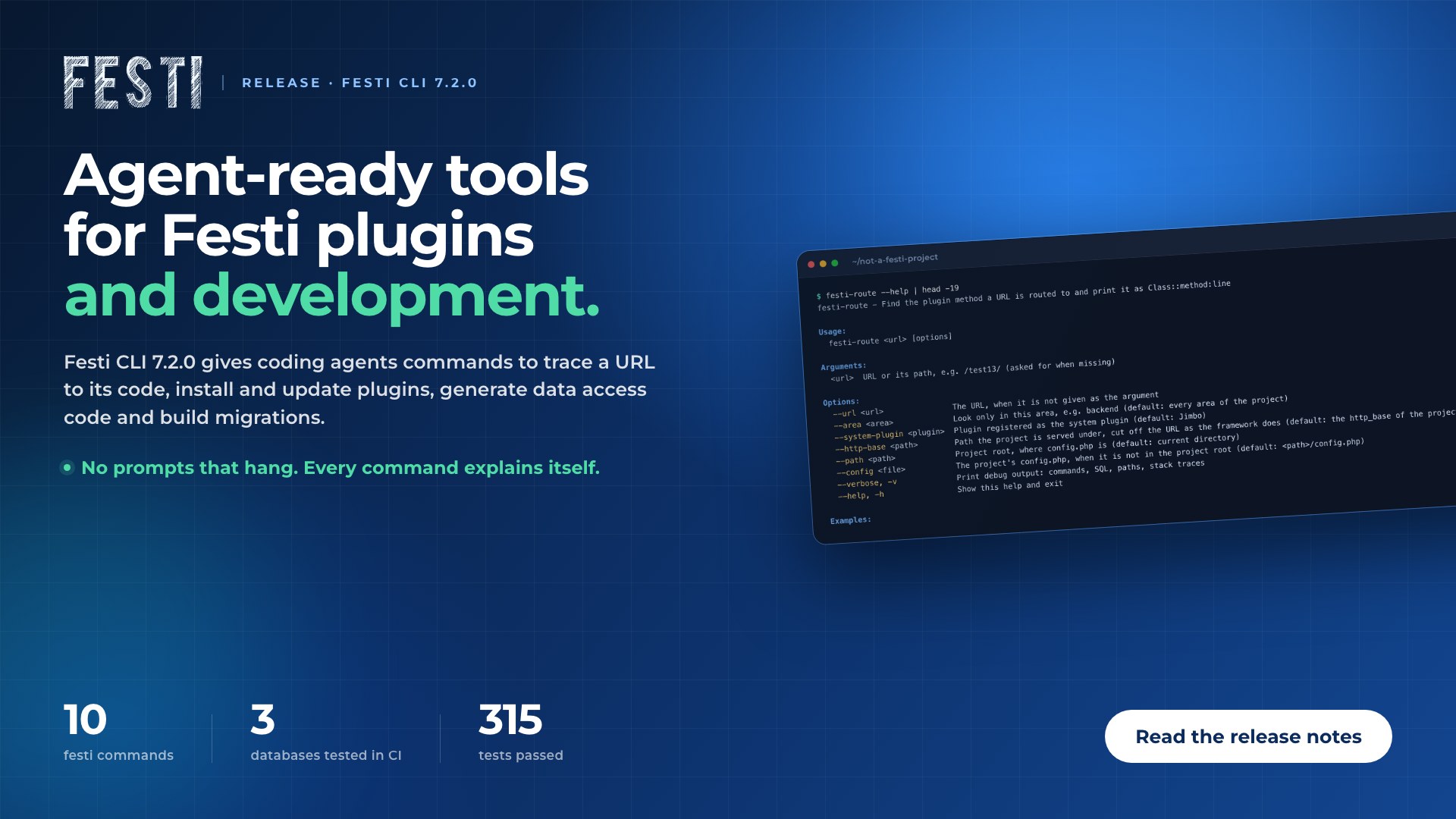
Festi CLI 7.2.0 gives coding agents and developers commands to operate Festi plugins and the development process: trace a URL to its code, install and update plugins from git, generate data access code, and build migrations.
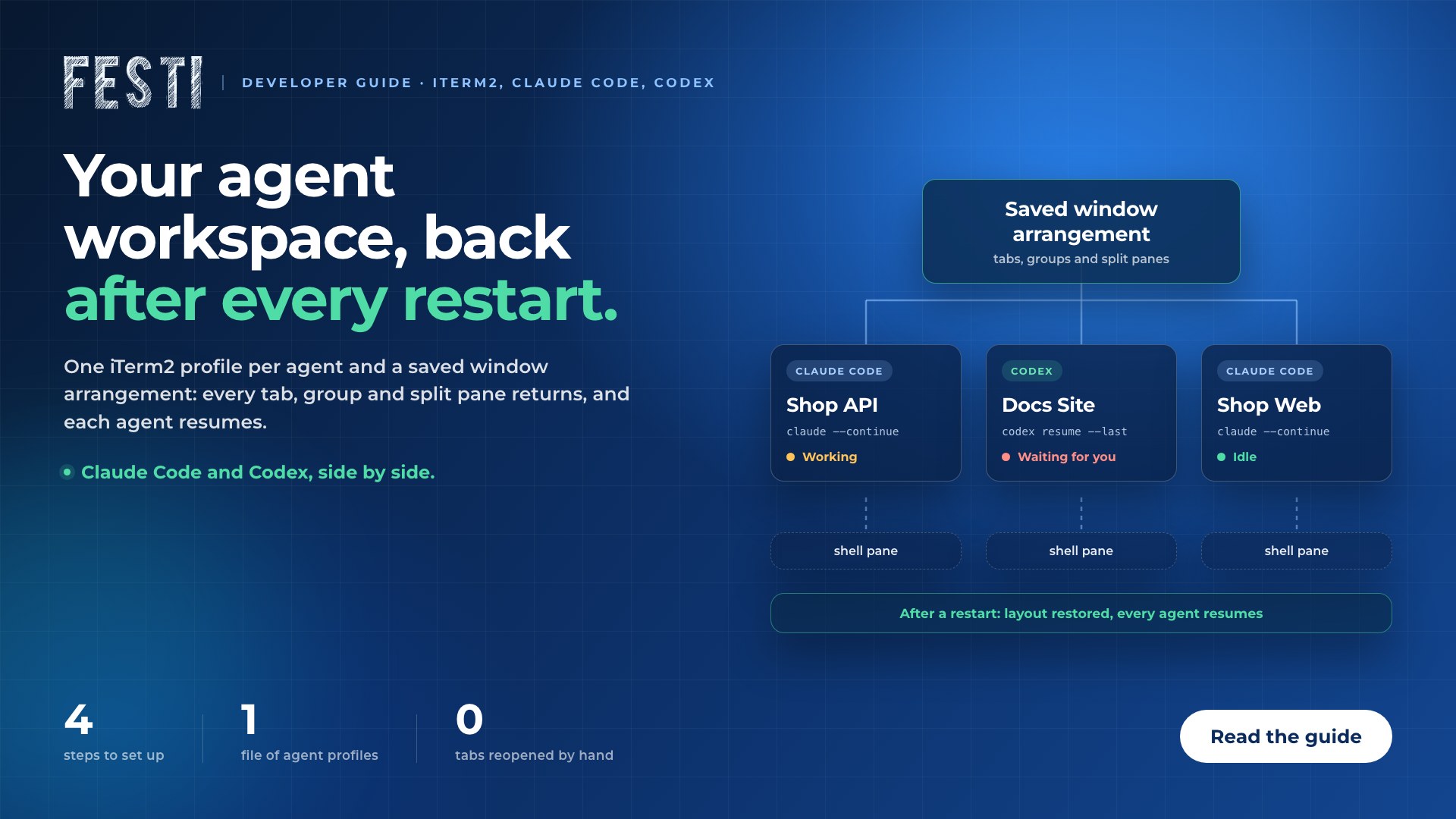
How to set up iTerm2 for Claude Code and Codex: one profile per agent, a status on every tab, and a saved window arrangement that brings back every tab, group and split pane after a restart, with each agent resuming its last conversation.
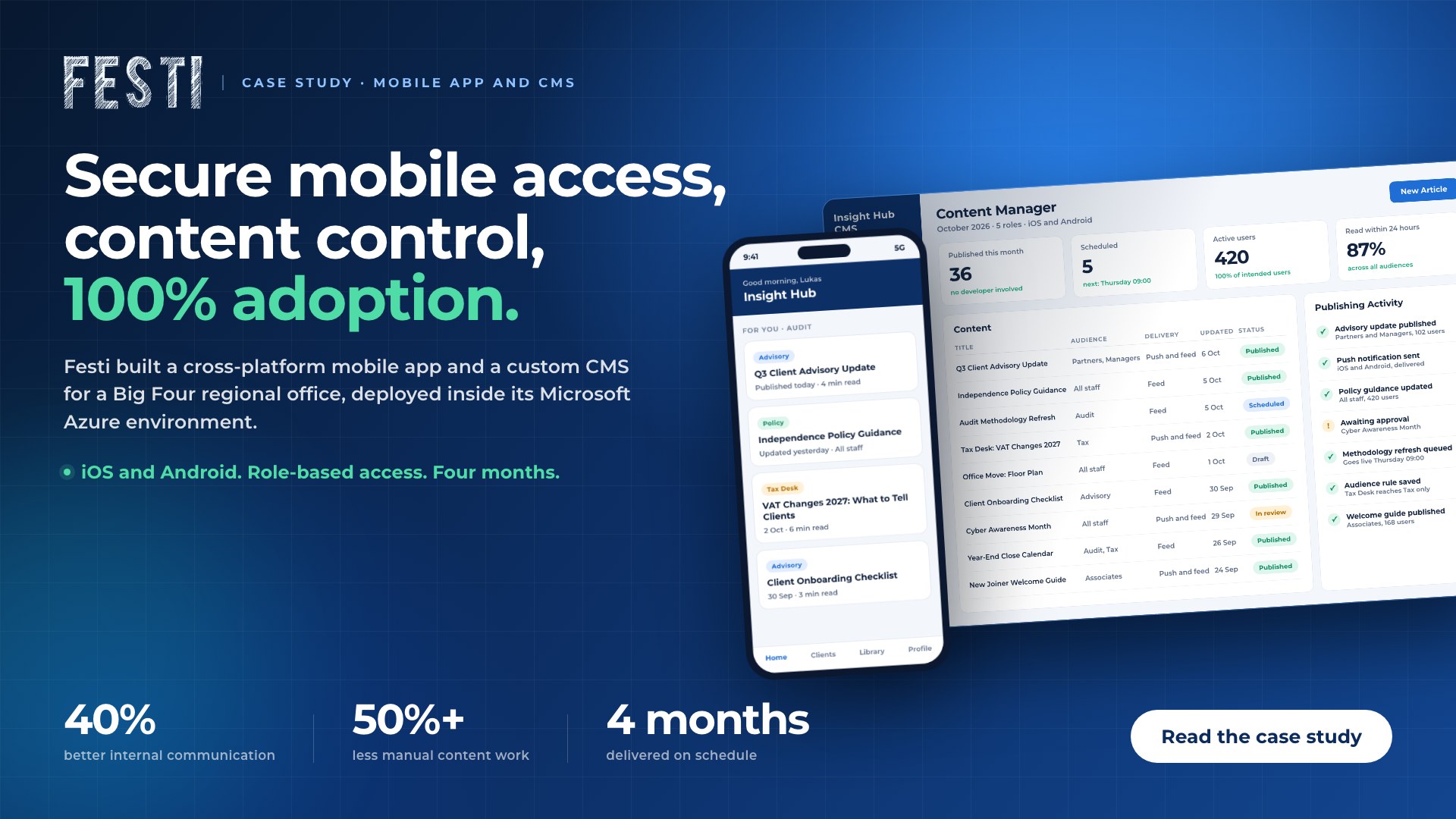
Festi built a cross-platform mobile application and a custom CMS for a regional office of a Big Four accounting firm, deployed inside its existing Microsoft Azure environment. Internal communication efficiency improved by 40%, manual content update workload fell by over 50%, and every intended user adopted the platform after a four-month build.
Get in Touch
Tell us where dataset work and model experiments are slowing your team down, and we will show you a practical path to automating it.